Design Factory - From idea to product
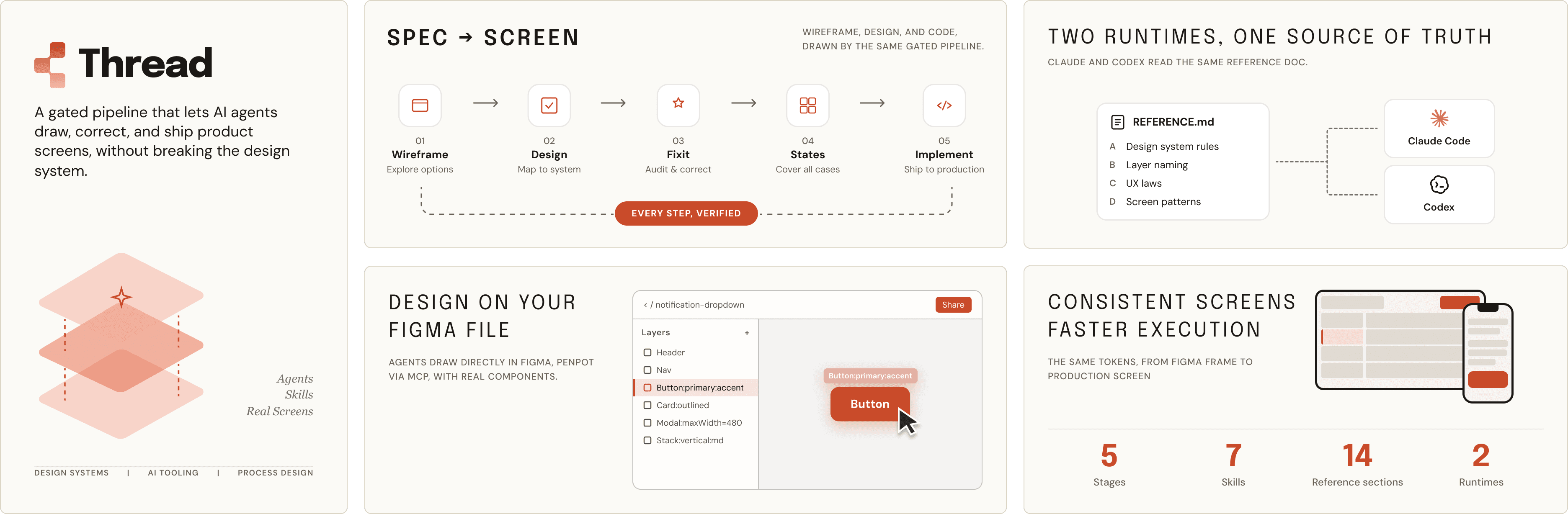
A gated, six-stage pipeline that lets Claude Code and Codex draw, correct, and ship a product's screens: from a one-line spec to production components, without drifting from that product's design system.
Role :
Design systems lead
Product Strategy
Runtime & Canvas:
Claude code, Codex
Penpot
Timeline :
May 2026
Skills :
Product Design & Strategy
AI automation
The problem
Speed and fidelity to the design system are two different axes
AI agents move fast, but they don't remember the rules: CTA placement, spacing tokens, contrast minimums. A design system nobody's forced to read isn't a constraint, it's a suggestion nobody enforces.
Three decisions the system is built on
Everything below follows from these three calls.
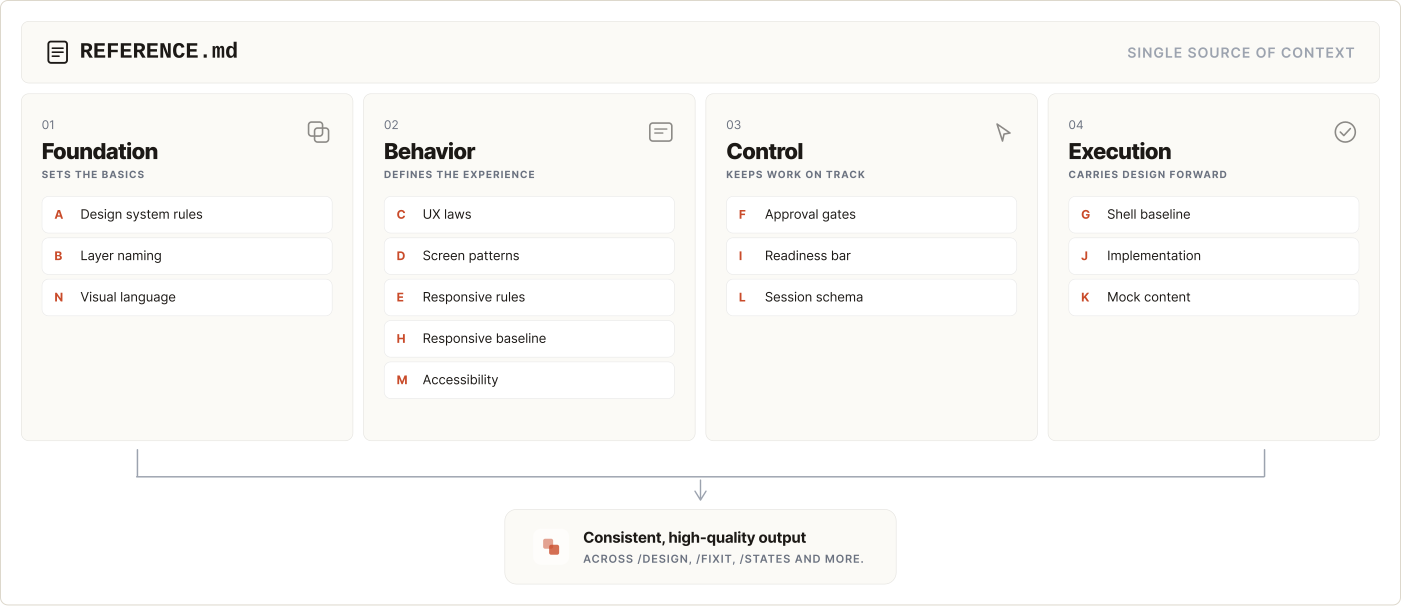
Claude Code and Codex read the same reference doc. Update one rule, both agents inherit it.
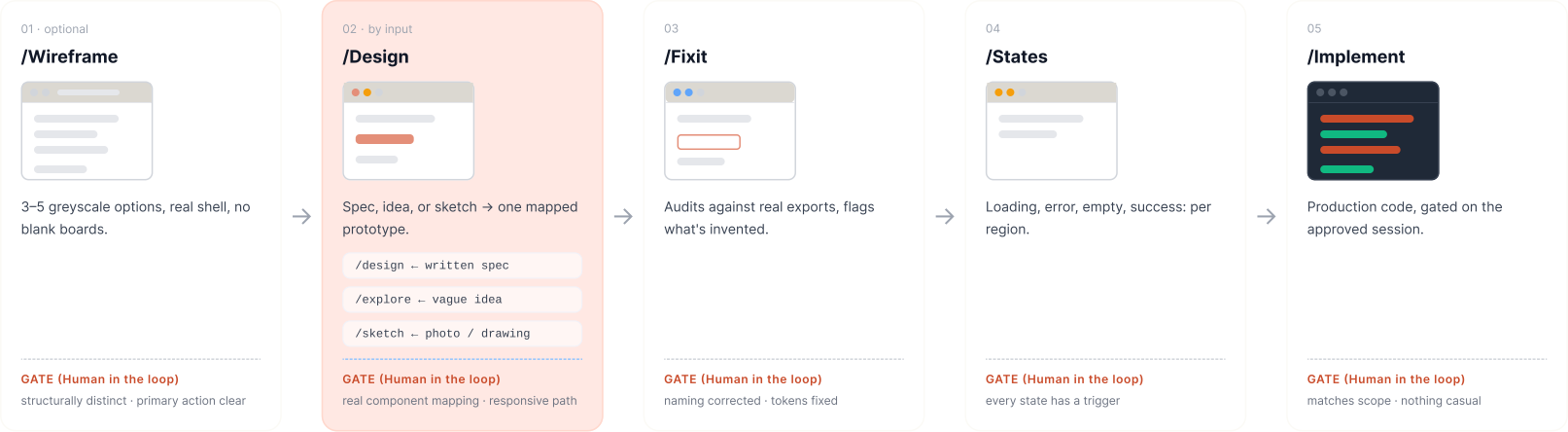
Every stage carries an approval bar. Can't clear it, can't hand it forward.
The agent draws, layers named after real components, so the next stage reads it directly.
The system
A claude plugin with series of skills to connect all this together


The constitution
One capability at a time

The pipeline
Five stages, one branch, seven skills
Each stage owns a single Penpot page and can't touch the others. A stage that isn't ready to advance has to name exactly what's missing.
Three artifacts, not just a workflow diagram

What it ships
The same tokens, from Penpot frame to production screen
Recreated, not a live capture, but every colour, pill, and spacing value here is pulled straight from the tokens in REFERENCE.md.

What's next
A living document
REFERENCE.md carries its own debt ledger: a table of known design-system violations still in the codebase, fixed opportunistically whenever a skill touches that file rather than in a dedicated cleanup sprint. Every full-page design also has to produce 768px and 375px companions before it counts as approved, so the pipeline can't quietly ship desktop-only work. As a product adds surfaces, the reference doc grows with it: the constitution updates, both runtimes inherit the update on their next read.
"AI doesn't make one bad decision. It makes the same one, a hundred times, before anyone notices."