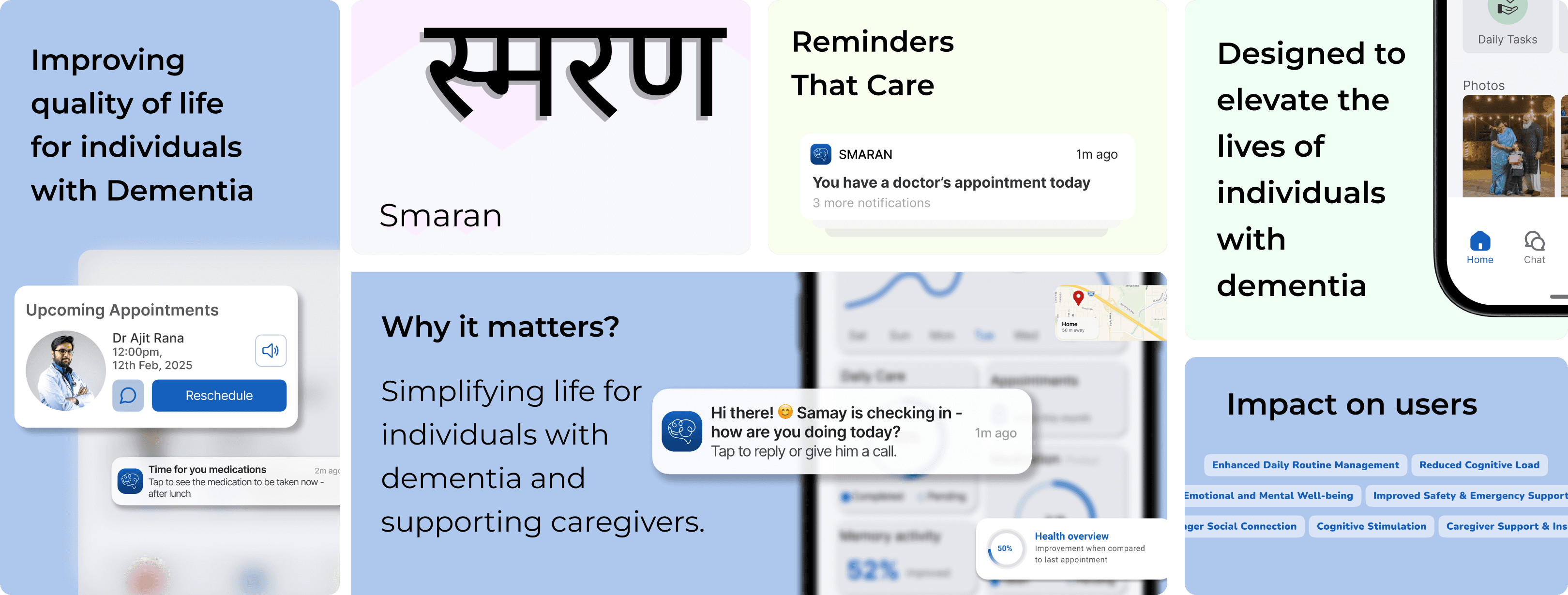
An integrated dementia care solution - 6 month of architecture research, evolved into a digital companion when I realized caregivers needed support just as much as patients.
Role :
Designer
Researcher
Team :
Prof. Jambavati Gouda
(Thesis guide)
Timeline :
Jun 2025 -
Jun 2026
Skills :
UX Design
Vibe coding
Context
While working on my architecture thesis, I discovered a heartbreaking reality: people with dementia were living behind metal bars in care facilities and homes - not as punishment, but as the only solution caregivers knew for safety.
Smaran is an empathetic care solution designed to promote independence, safety, and emotional well-being for people with dementia, while giving caregivers and families reassurance through gentle, human-centered support.

Research & Insights
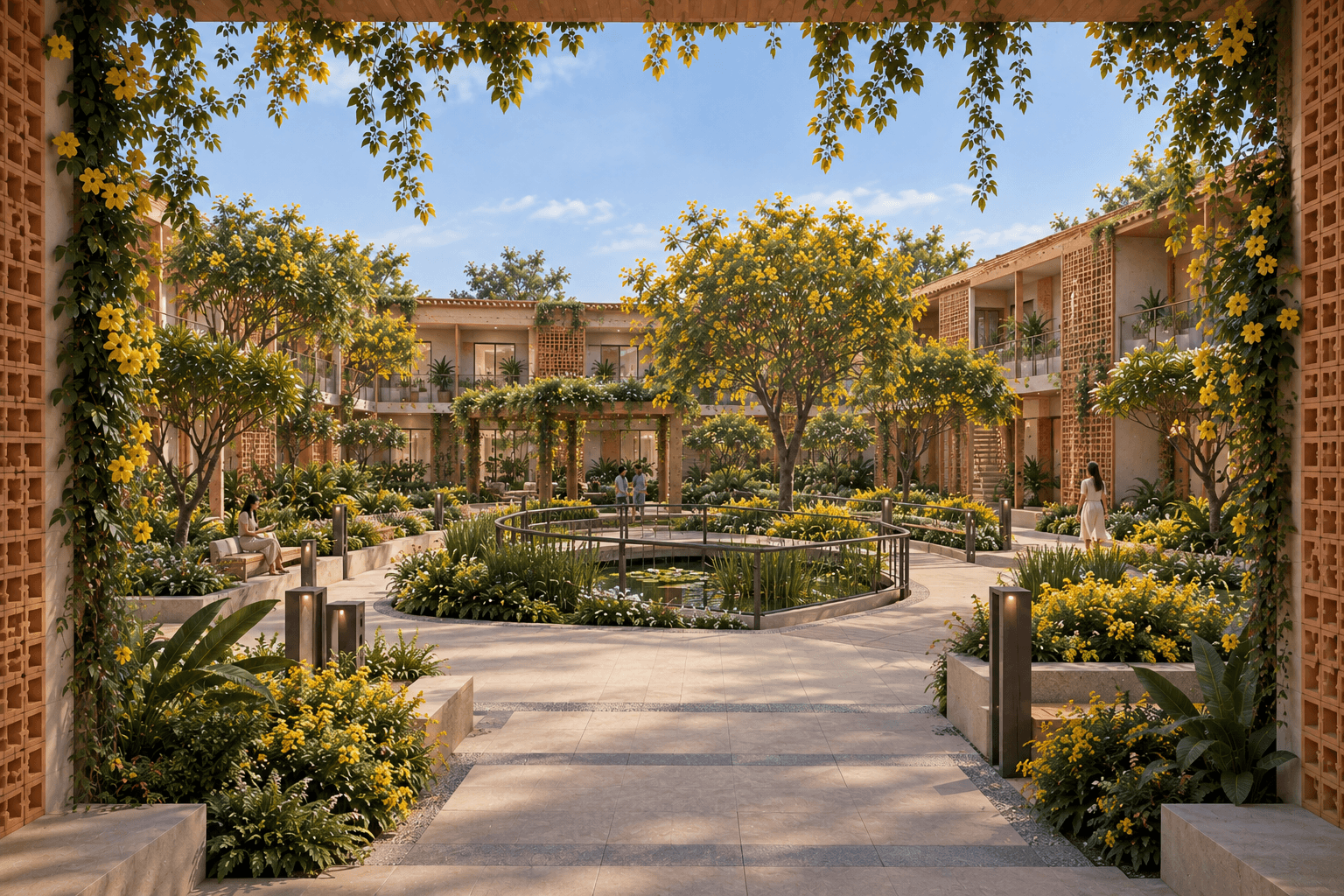
While designing a dementia care center for my architecture thesis, I spent 6 months at care facilities in Bangalore. I discovered people with dementia living behind metal bars - not as punishment, but because caregivers had no better safety options. I designed a care center using architectural principles: looped pathways, vegetation wayfinding, no railings - dignity through design.

Where it all started: My architecture thesis (2023-2024)
Research Phase
Where it all started: My architecture thesis (2023-2024)
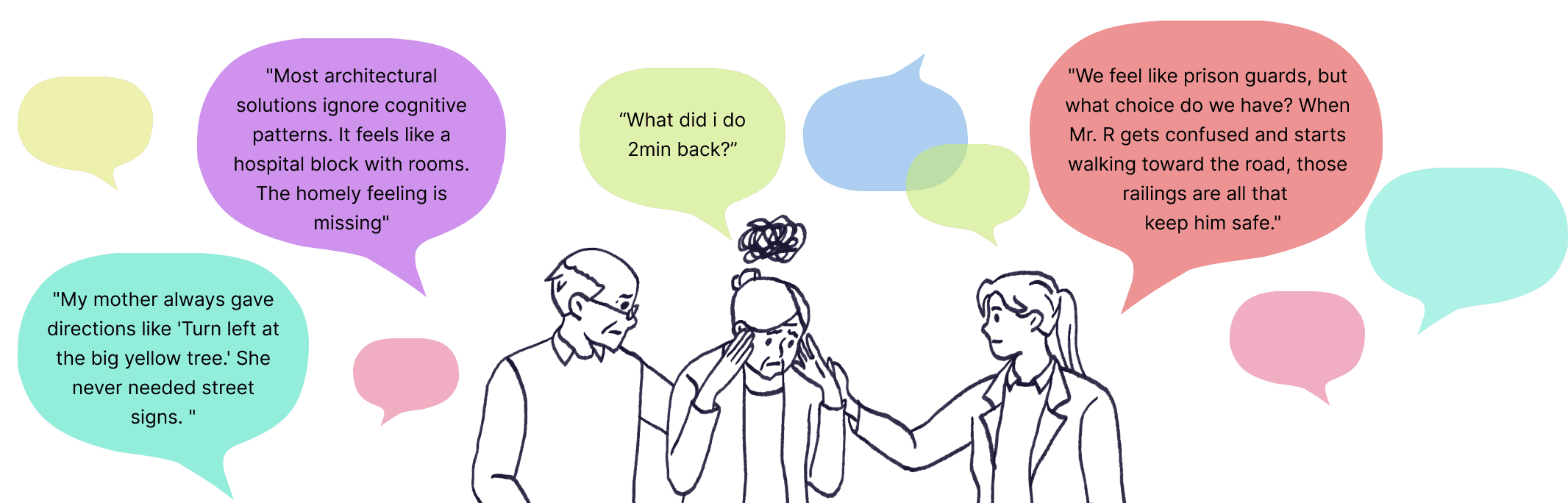
6 months of ethnographic
3-4 dementia centers in Bangalore and 4-5 od age home in Udupi, 1 in Pune
Direct observation of daily behaviors and movement patterns
Stakeholder interviews with doctors, caregivers, and families
Family surveys revealing exhaustion and fear
Studying the best practices and research on dementia.
Key Insights
The design principles are found with literature study and categorized into various themes which can aid a person with dementia. The overarching themes in these studies are orientation, light, and sensory elements.
Leveraging the city's "Garden City" heritage, I designed wayfinding through native vegetation - intuitive, beautiful, and culturally familiar.
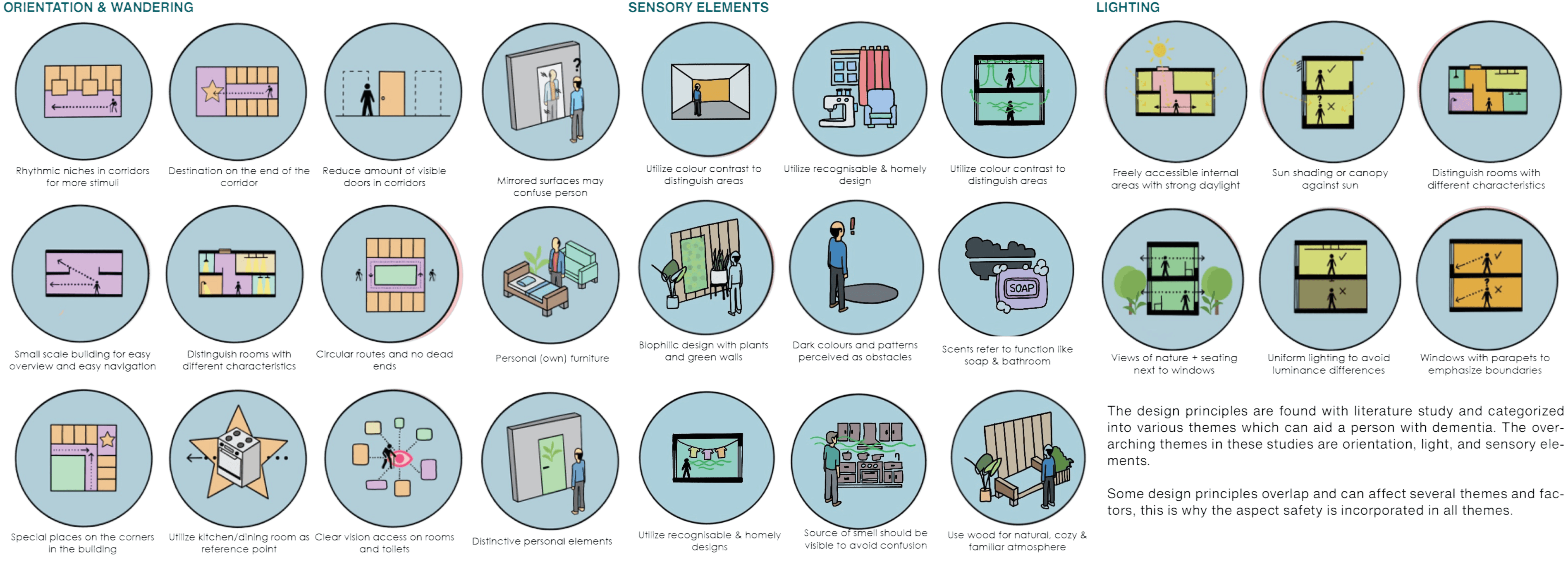
More details of the research
Architectural Solution - Design



The Realisation
After graduation, I kept thinking about what I'd observed. The physical environment helped patients, but caregivers - often exhausted family members - still struggled daily.
They needed:
Daily task management support
Peace of mind about patient safety
Connection to medical help
Memory support tools
That's when I returned to the project - this time as a product designer - to create a digital companion that completes the care ecosystem.
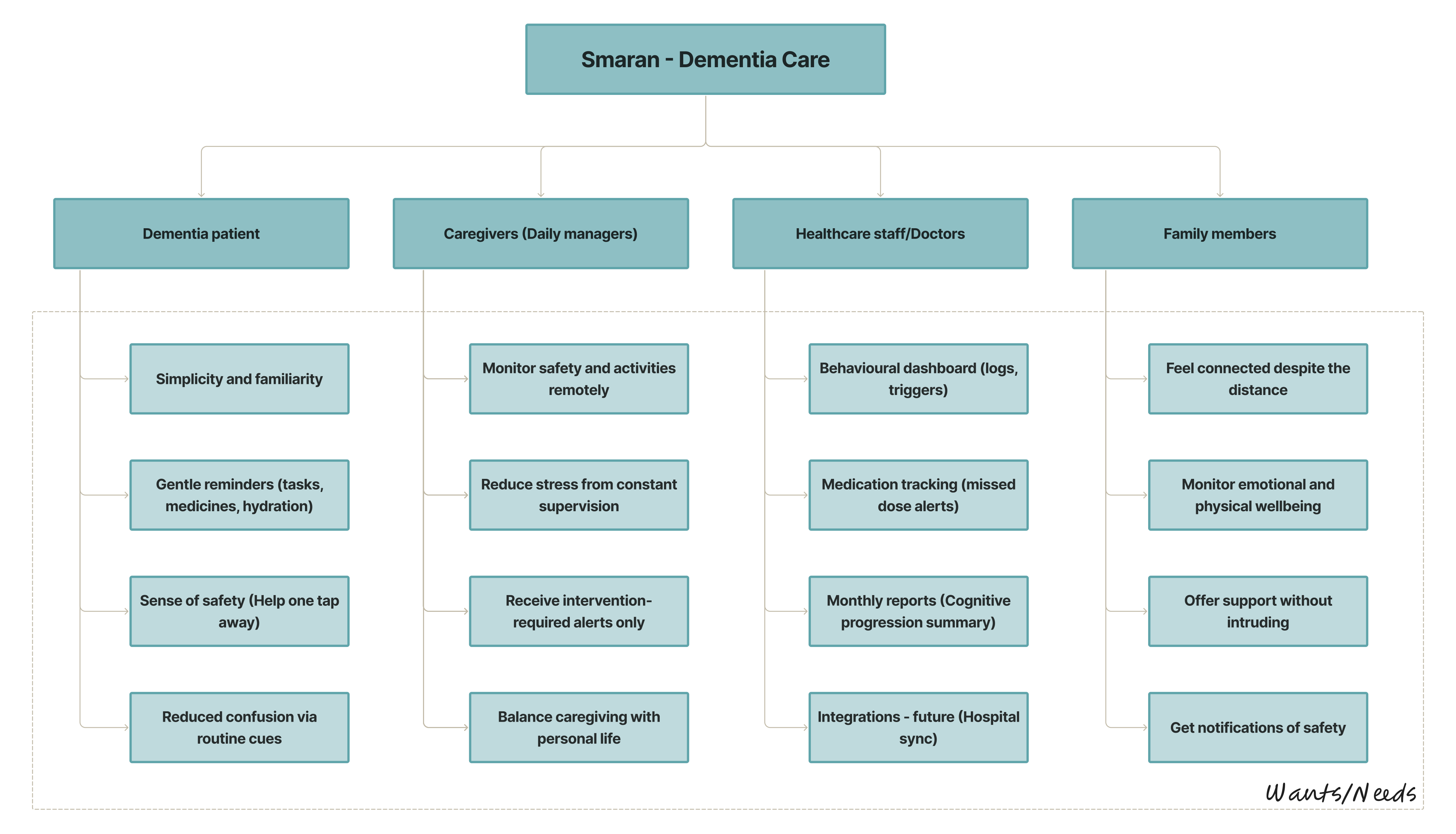
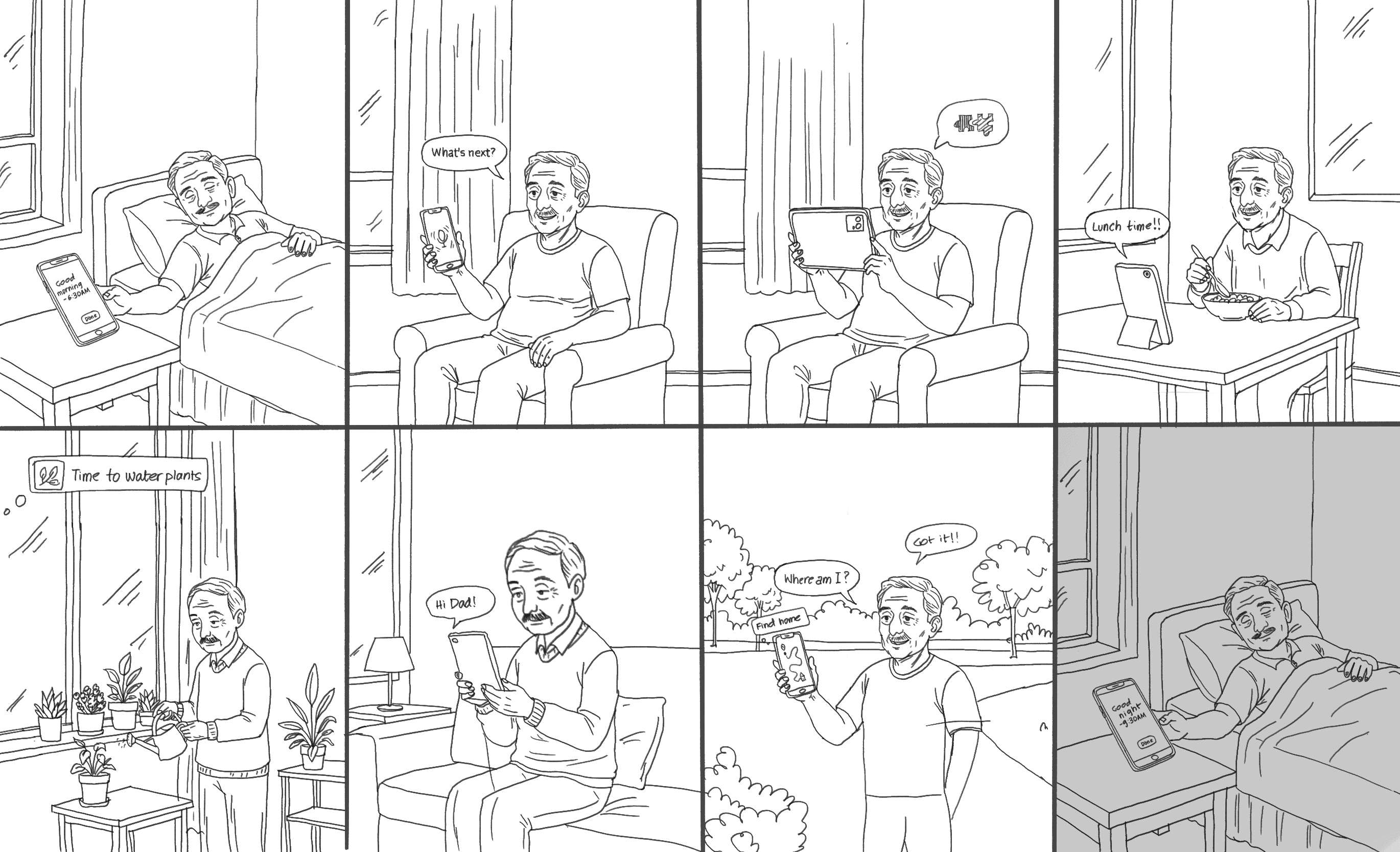
The UX Design journey
After graduating, I continued researching on dementia care. I realised the architecture solved patient needs, but caregivers were still:
Exhausted from managing daily routines
Anxious about patient safety when not present
Struggling to coordinate medical care
Lacking tools for memory engagement
User Flow
Architecture principles meet interaction design
The app's navigation mirrors the physical care center's design:
Looped flows (no dead ends)
Home screen as anchor (like a central courtyard)
Clear decision points
Familiar patterns that build trust

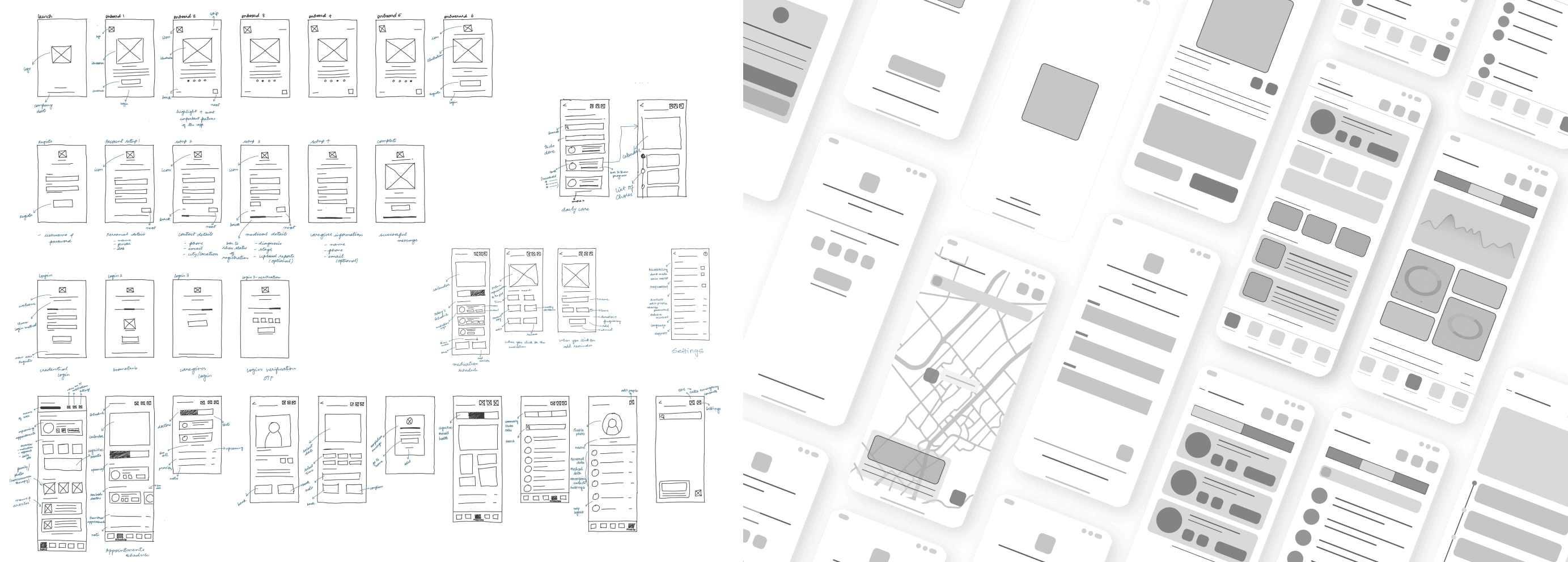
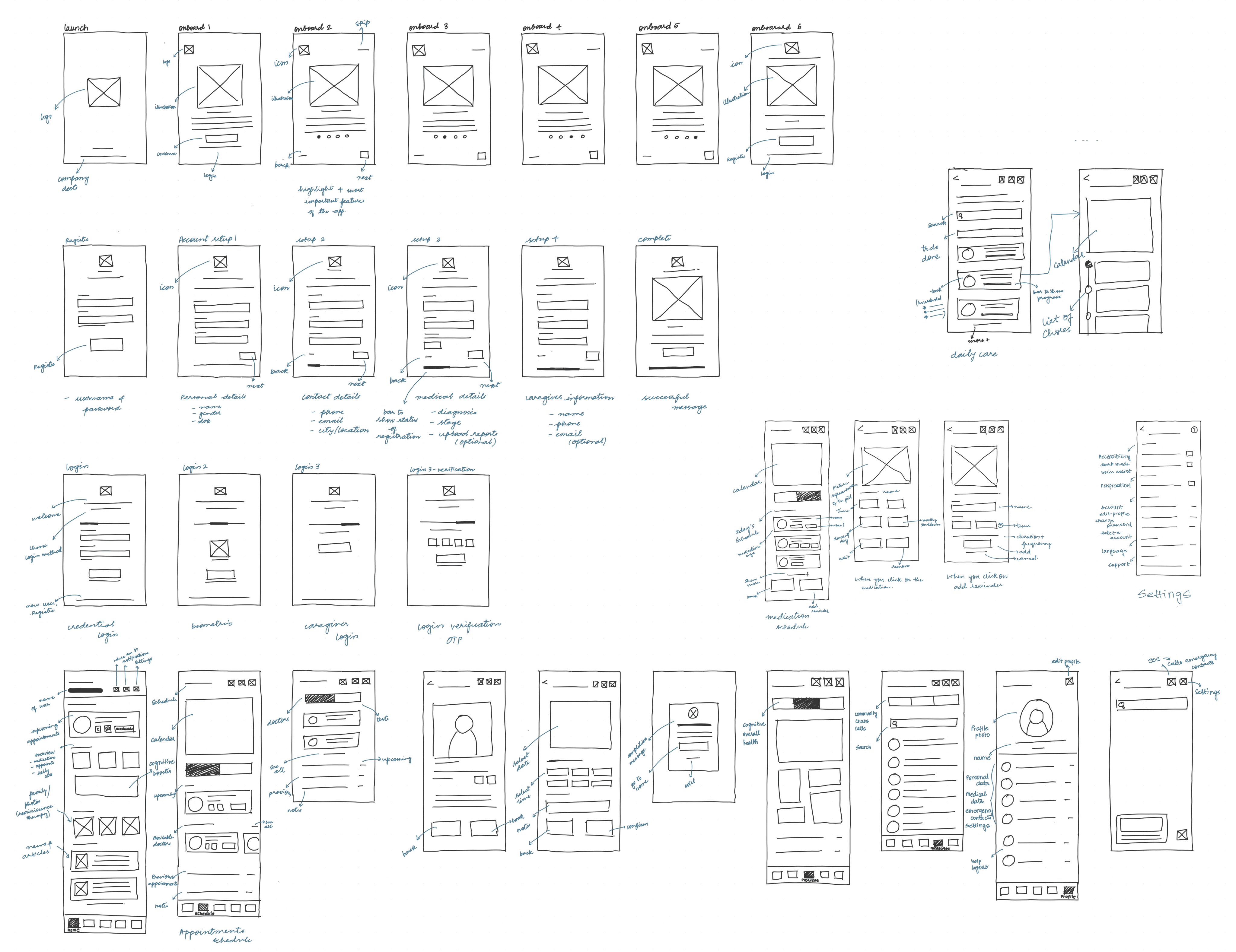
Wireframing and Early Explorations
I sketched multiple approaches, testing layouts that would be simple enough for dementia patients while comprehensive enough for caregivers:
The Home as an Interaction Anchor
The splash leads into a calm, familiar home screen - the daily anchor patients return to for clarity and reassurance.
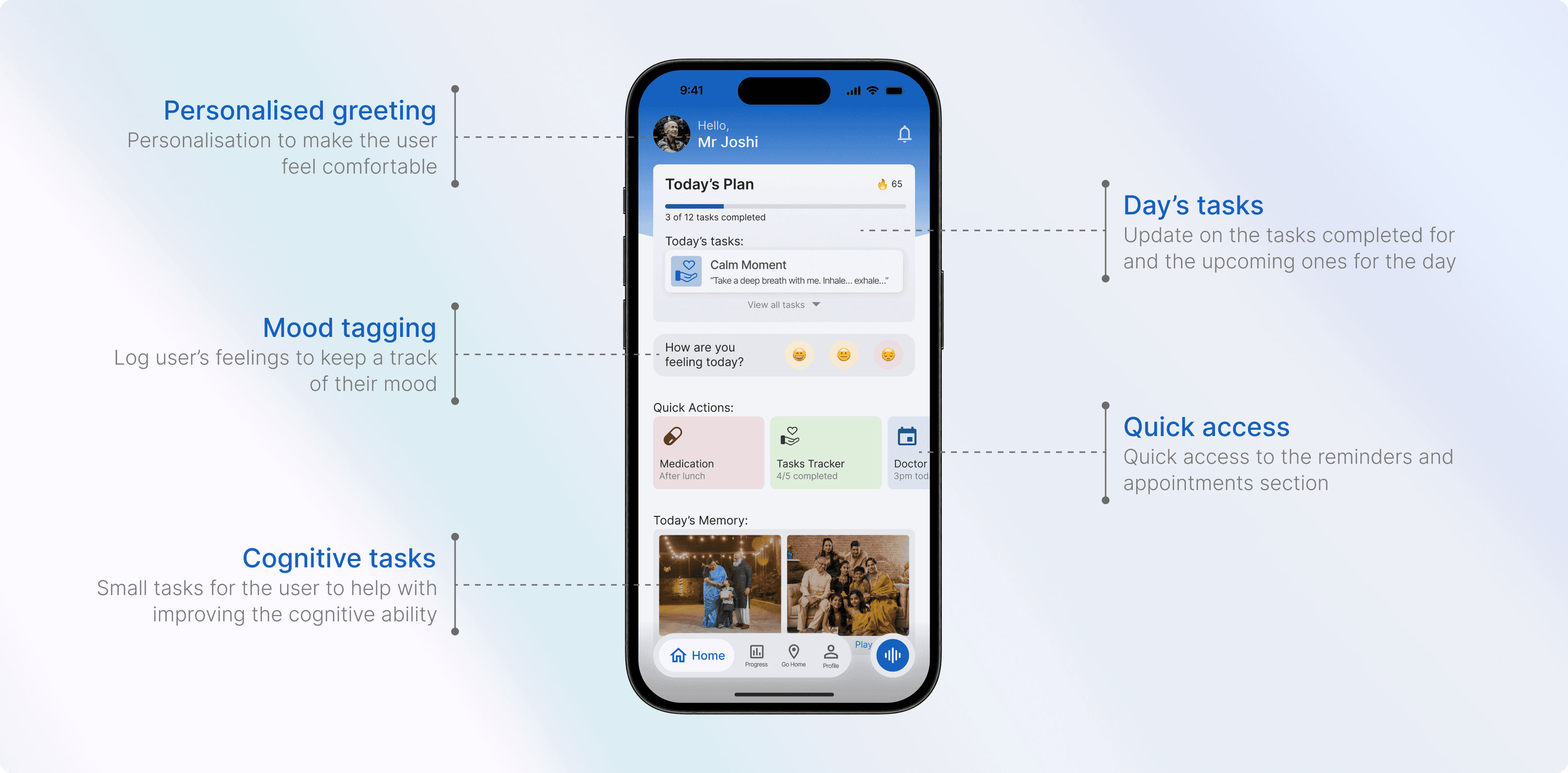
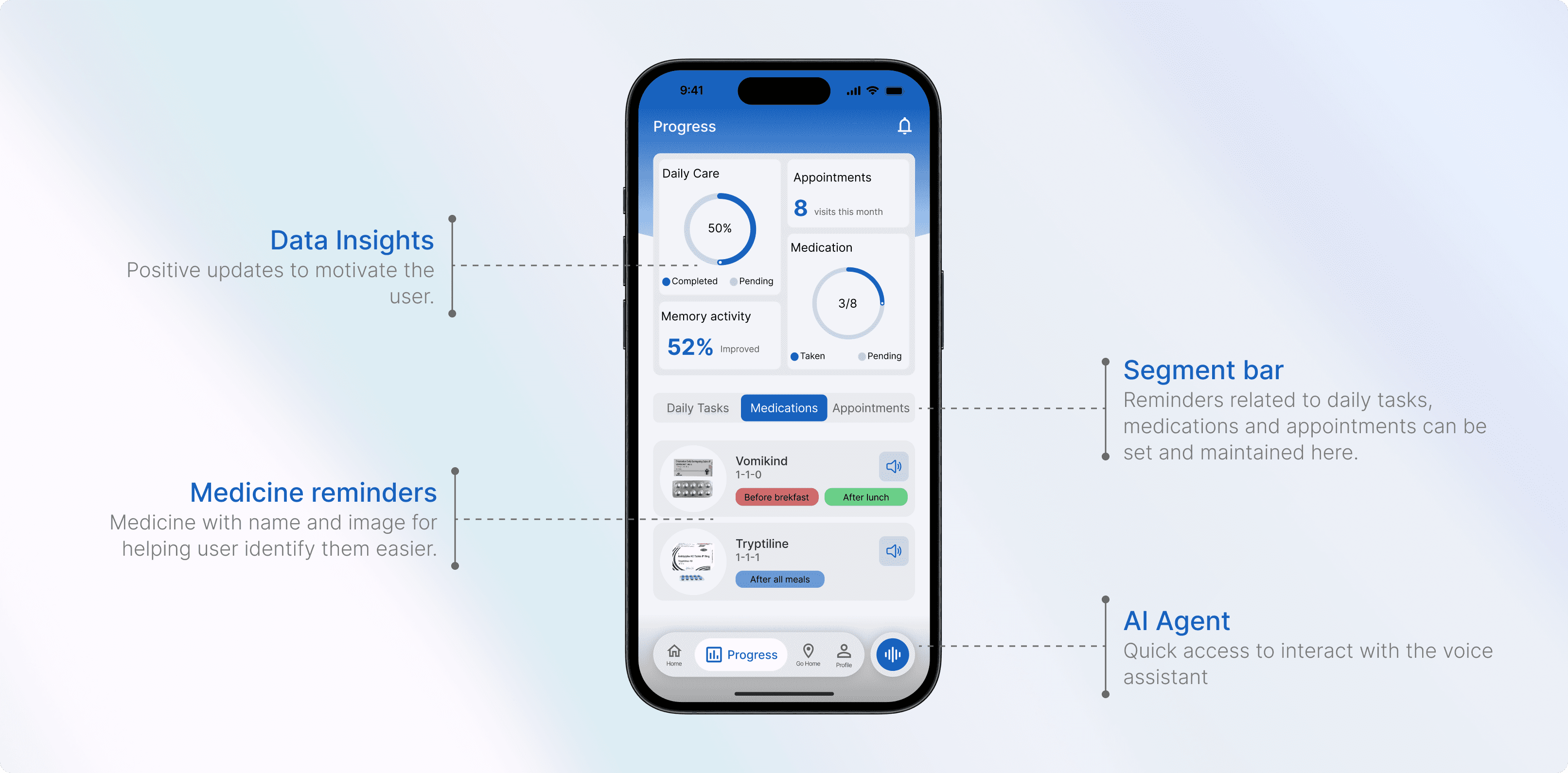
Daily Routine (Medication + Tasks)
Smaran simplifies daily routines by combining medication and everyday tasks into clear, step-by-step flows. Each action ends with reassurance, helping patients feel confident and caregivers stay informed.
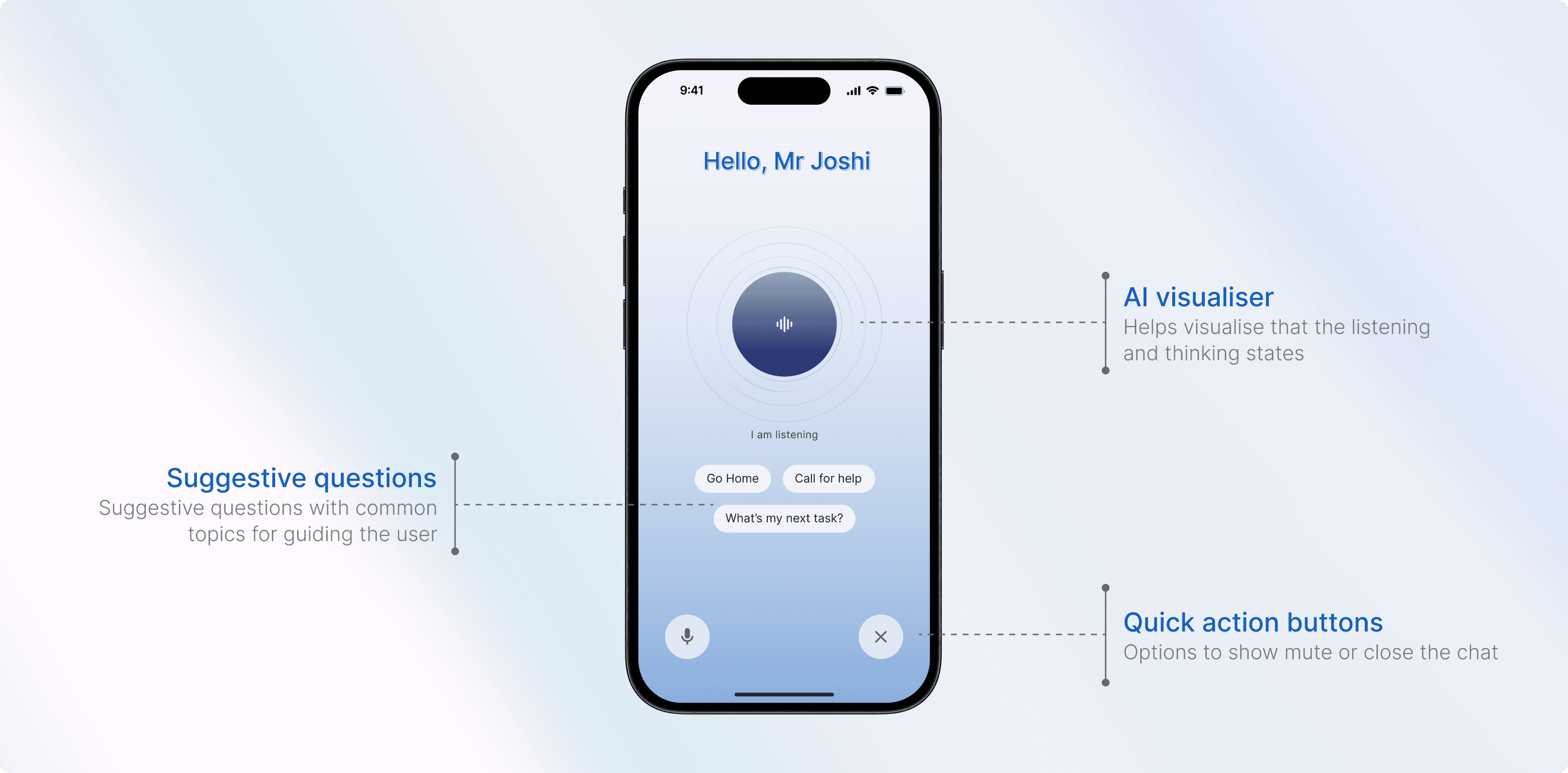
Assistant
AI assistance to provide real-time support for people with dementia, so they can learn about everything by just talking.
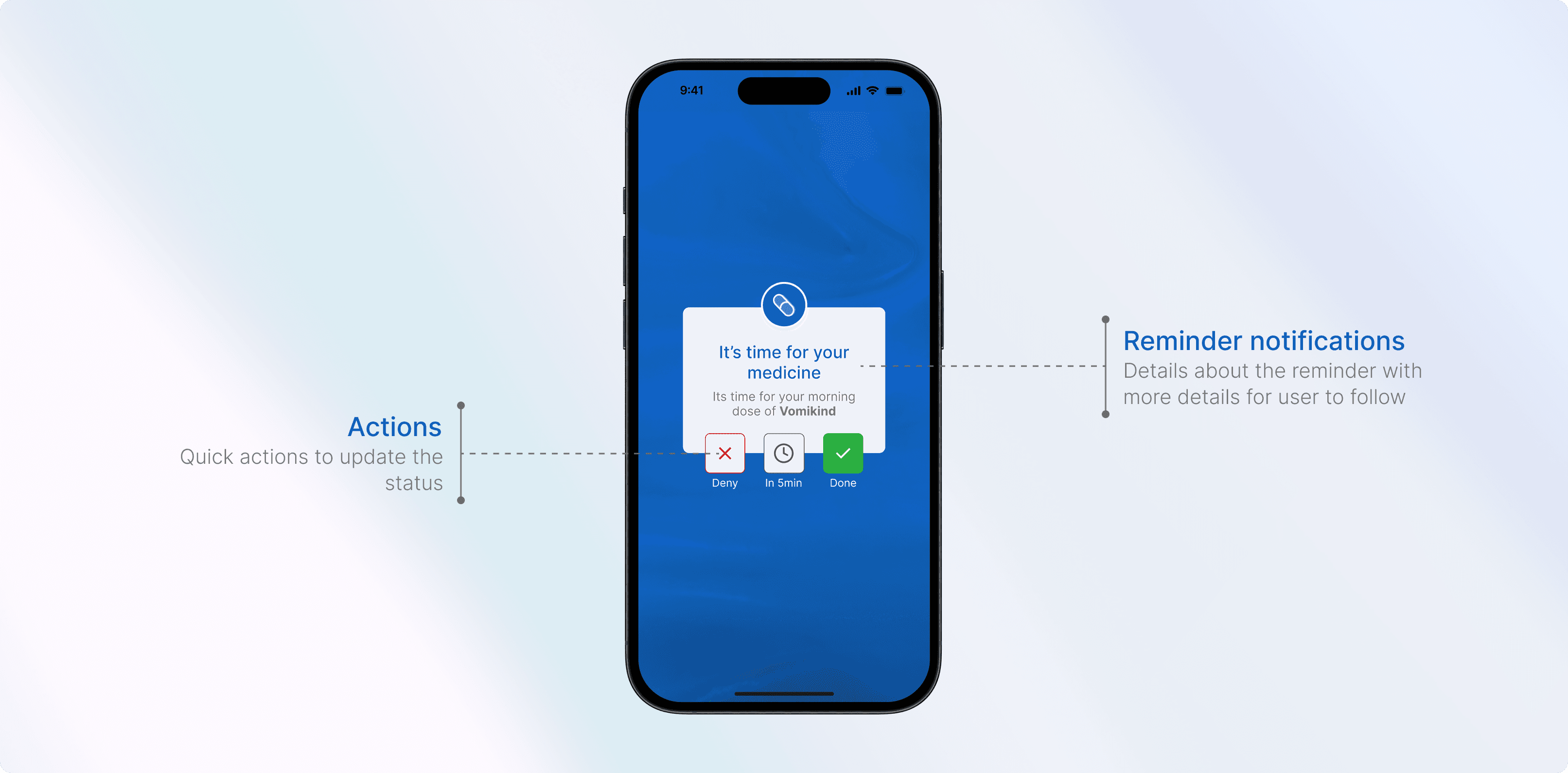
Reminders
Reminders for logging the status to keep a track of daily routines.
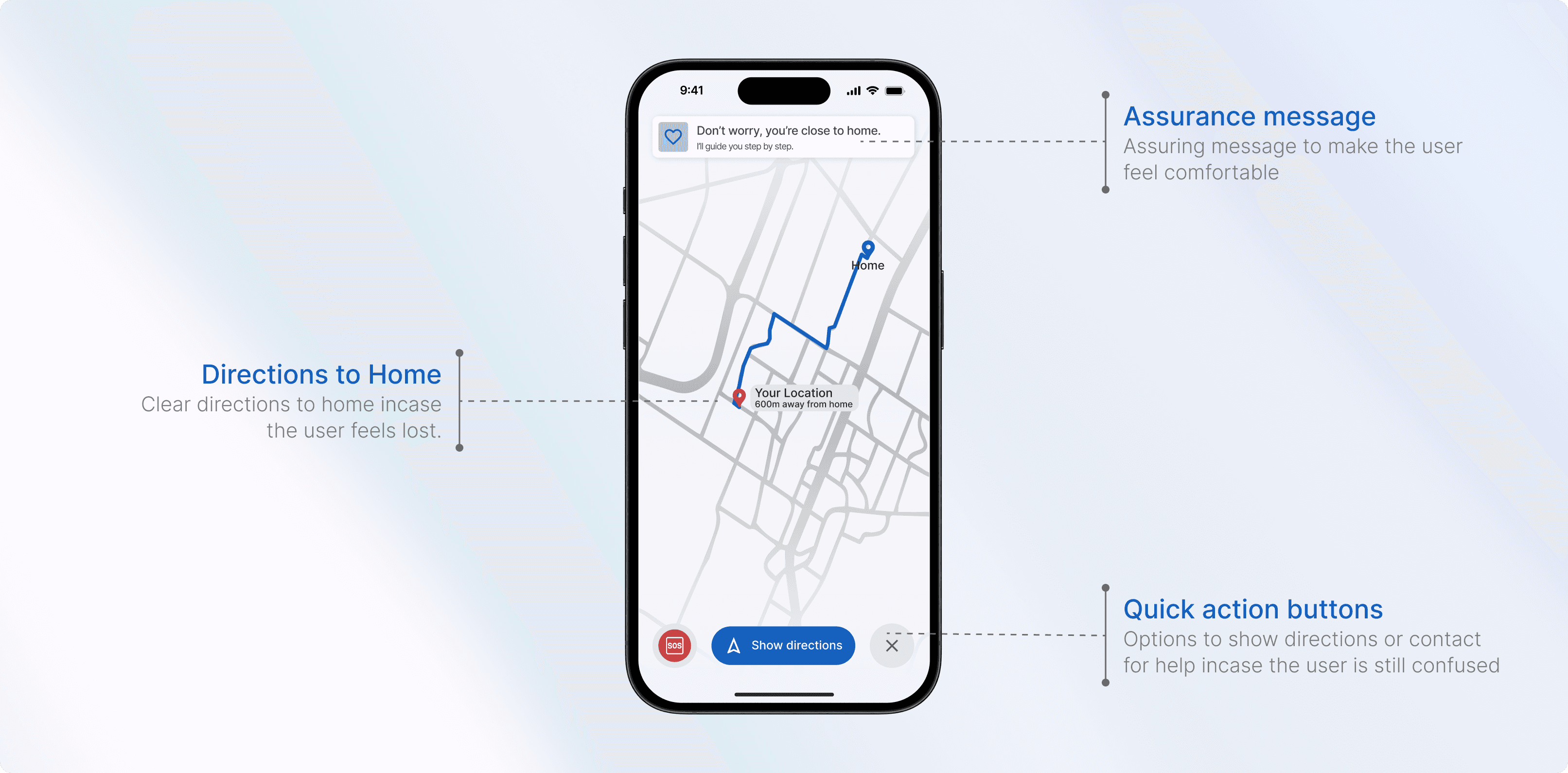
Help & Safety
A persistent help button ensures patients are never left unsupported, instantly alerting caregivers and providing peace of mind.
Beyond the Core Flows
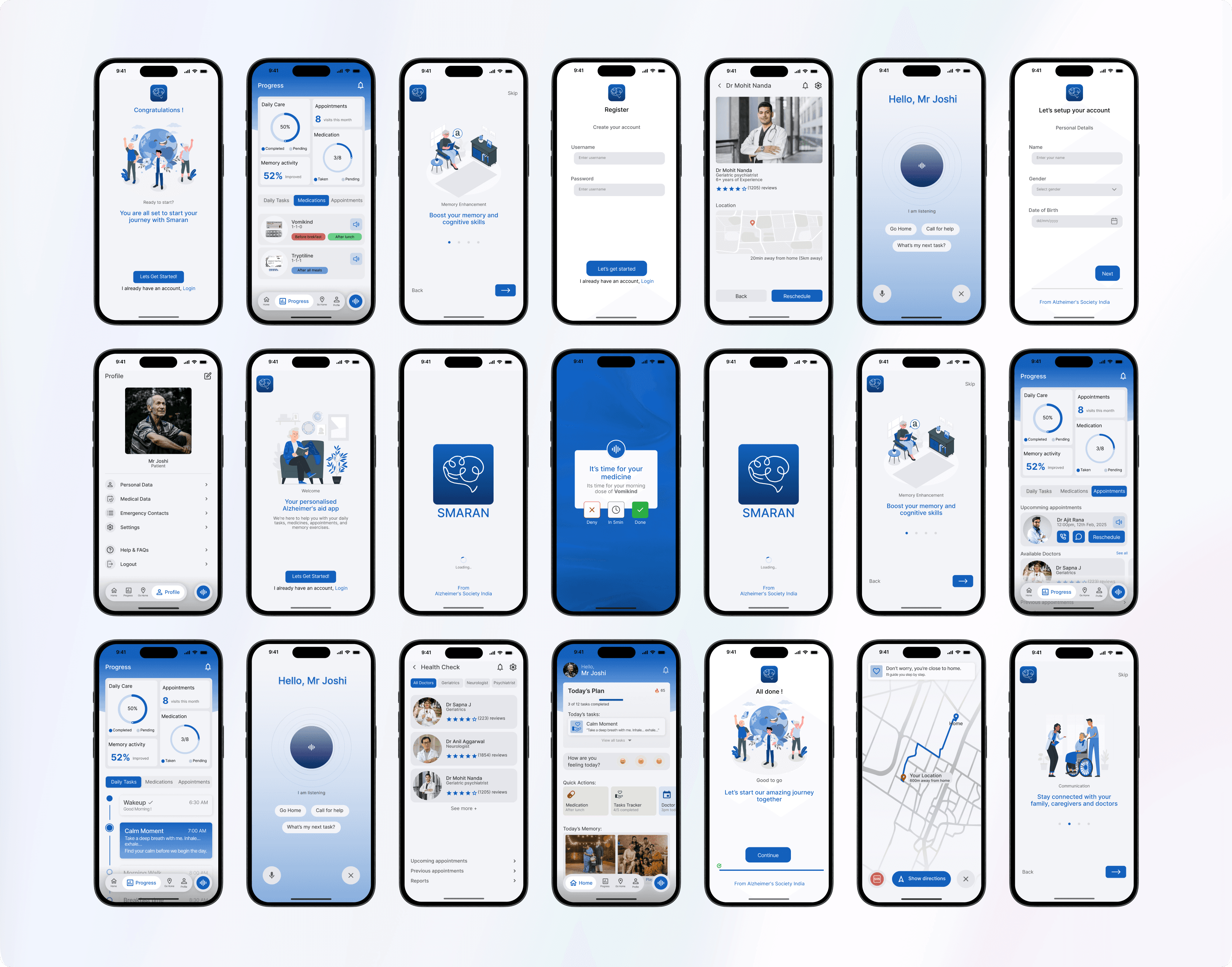
Onboarding, settings, and supporting interfaces build out the full product ecosystem, designed to empower caregivers and families without overwhelming patients.
What This Project Taught Me
Impact & Recognition
Top 6 Architectural thesis projects at Manipal University
First integrated architecture + technology solution for dementia care
Methodology pioneered human-centered design for vulnerable populations

From Architecture to Product Design
This project didn't end with graduation - it transformed my entire approach to design. This project taught me that whether you're designing buildings or building software, the fundamental question remains the same: Does this preserve human dignity?
The Broader Mission
In a world racing toward AI and automation, designers have a responsibility to ensure technology serves humanity - not the other way around. Whether it's a yellow tree guiding someone home or an AI that anticipates needs without feeling invasive, the best design is invisible until it's needed.
Global Relevance
India's Aging Reality: 340M seniors by 2050 (current: 140M)
Design Opportunity: Proactive solutions for cognitive accessibility
Career Mission: Scaling empathetic design through multiple platforms
Design should make people feel more human, not less.