
I was the sole designer behind Mindlap, an AI-native platform built at Think41 for orchestrating AI agents across the software development lifecycle. I owned the product end to end, from user research and interaction design to the design system, engineering collaboration, implementation QA, and continuous product refinement.
Role :
Designer
Researcher
Team :
4 Engineers
3 Co-founders
Timeline :
Jun 2025 -
Jun 2026
Skills :
UX Design
Vibe coding
agent reliability in production
only 47 of 1,247 runs needed human intervention/failed
parity with human engineering hours
benchmarked against 4 real, already-shipped PRs
$4,365 reclaimed
the time-saved/value figure
Context
Modern teams lean on AI to accelerate coding; it improves velocity and fragments context in the same motion. Requirements, architecture, and decisions are scattered across Jira, GitHub, Slack, and documentation that quickly falls out of date.
Mindlap gives engineers and AI agents a shared understanding of the system they are building.
Requirements, code, docs, and decisions live across disconnected tools.
Context switching, outdated docs, and inconsistent AI outputs.
Humans and AI work with different understandings of the project.
Research & Insights
I led qualitative research with engineering managers and developers through interviews, workflow mapping, and artifact analysis. The goal was to understand where alignment breaks down once AI enters the development process.

Key Insights
Teams do not fail at execution; they fail at context continuity
Documentation loses trust when it does not evolve alongside code
AI tools work best when they operate within a well-defined system boundary
Decision-making is continuous, but decision records are not
These insights revealed the need for a system that doesn’t just store information, but actively binds intent, decisions, and execution over time. That became Laps: structured loops that bind intent, execution, and reflection.
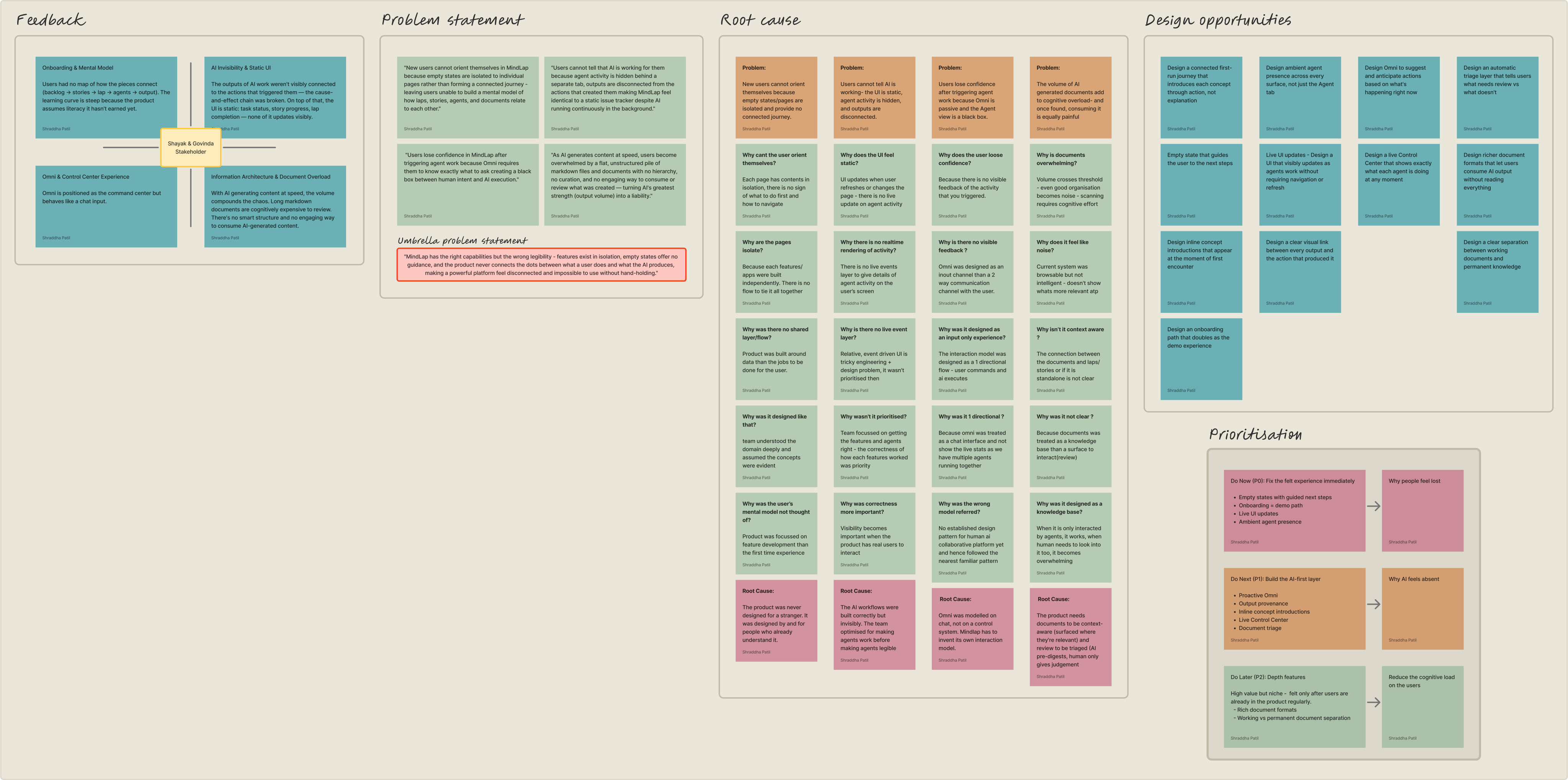
The reframe for the product:
Users didn't need to see more data. They needed proof the AI running unsupervised was worth what they were already paying for it.
Solution
Fragmented context needed a structural answer, not another dashboard. The fix was to stop treating intent, execution, and decisions as separate artifacts scattered across four tools, and bind them into one loop instead: the Lap.
A Lap starts with intent, carries it through agent execution, and closes with reflection so the reasoning behind a decision lives next to the code it produced
Human–AI-in-the-loop by design
mindlap is built around a human and AI-in-the-loop model, where AI agents accelerate execution while humans retain authorship, judgment, and accountability.
Decisions are not automated away, they are surfaced, reviewed, and fed back into the system as evolving context.
Why spec-driven development matters in AI-native workflows
As AI accelerates code generation, specifications become the primary interface between intent and execution.
MindLap treats specs not as documentation, but as executable infrastructure continuously synchronized with code, decisions, and outcomes across each Lap.
Features
Users were able to define their intent and run parallel laps and complete tasks by playing the role od a deep expert over micromanaging the agent at every stage.
Interaction Design
Omni the one surface that carries a user from typing an instruction, to watching an agent work, to auditing what it shipped, without a single page load in between.
Reflection
Designing trust for a fleet of AI agents that ship real code turned out to be a completely different problem than designing the screens around them.
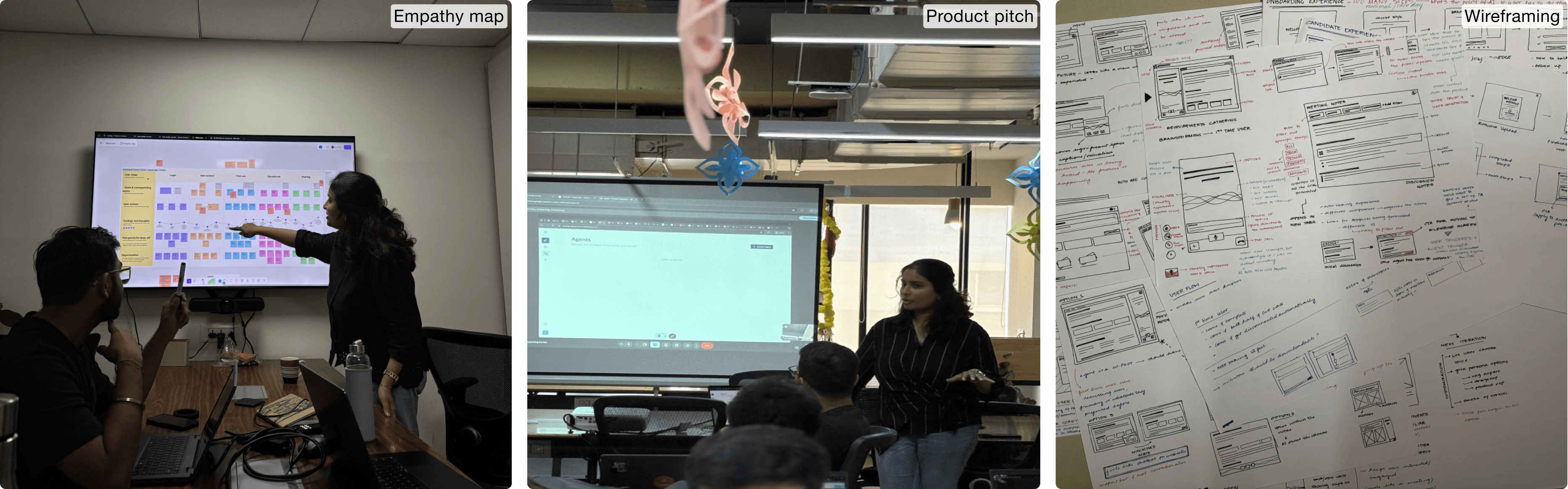
When an agent runs it unsupervised, busy tells you nothing, the only real number is whether you can trust what it did while you weren't looking.
New users just saw words they had to look up the F1 references (laps) before they could use the product. If you have to explain the name, you've already lost the exchange.
From iterations to implementation, polishing and debugging, its way easier and faster with custom skills and subagents.
Turning specifications into living infrastructure for AI-native execution.